Habitat Summit

Home Habitat Summit

Event Details

October 8, 2025 | Uwharrie National Forest

The Habitat Summit is a one-day, multi-session workshop where national experts share the latest land management techniques. Whether you’re managing your land for pollinators, timber, or game species, this is your one-stop shop to connect with the experts.

Continuing Education Credits Available

Habitat Summit Poster Session
Abstract submission will be open until July 26th. Acceptance to the poster session will be announced on a rolling basis. Early submission is encouraged. Presenters will need to bring their own easels for their posters.
We invite submissions for posters related to forestry, wildlife, land management, conservation, and other applicable natural resource topics. Awards for Best Visual Design, Most Applicable Research, and Best Overall Poster will be given out at the end of Habitat Summit. Presenters must have purchased a ticket to the event. 

Continuing Education Credits Available

Forestry CFES  

  • Category 1: 5.5 hrs

Pesticide Credits

  • G: 5.0 hrs
  • N: 5.0 hrs
  • D: 5.0 hrs
  • X: 5.0 hrs

The Wildlife Society

  • Category 1: 6.5 CEUs
Opening Session

Keynote: Dr. Marcus Lashley (University of Florida)

Topic: Managing Habitat to Increase Turkey Productivity 

Speaker: Luke Resop (Mississippi State University)

Topic: Using Fire Season to Manage Deer Habitat: Research Highlights and Management Implications

Speaker: Dr. Heather Alexander (Auburn University)

Topic: Drivers of Mesophication in Oak Landscapes and Implications for Fire Management

Speaker: Dr. David Coyle (Clemson University) 

Topic: Can you Kill it with Fire? Invasive Plant Management Strategies in the Southeast

Speaker: Dr. Chris Moorman (NC State University) 

Topic: Fire Effects on Wildlife: Severity, Season, and Frequency of Fire

Speaker: Jake McClain (Quail Forever SC State Coordinator)

Topic: Faulty Perception: Restoring a Comprehensive Vision of Habitat

Speaker: Jeremy Kessinger (Resource Wise) 

Topic: Timber Markets: Where we are at today and what may the future hold?
Speaker: Jordan Nanney (Compass South Forestry)

Topic: Integrating Silviculture and Habitat Management in North Carolina Forests

Speaker: Curtis Smalling (Audubon North Carolina) 

Topic: Birds Like Your Forest – Let’s Make Them Love It!

Speaker: Thomas Crate (NC State Parks) 

Topic: Fire Weather Tips for Prescribed Fire Practitioners

Speaker: Bonner Powell (Mississippi Department of Wildlife) 

Topic: Restoring and Managing Native Early Successional Plant Communities in the Eastern United States 

Speaker: Emily Callicutt (Three Rivers Land Trust) 

Topic: Leaving a Legacy – An Introduction to Conservation Easements

Speaker: Mikah Carver-McGinn (NC State University) 

Topic: From Forest to City – How Urbanization Shapes Deer Movement and Survival

Register for Event

Event Photos

Register for Event

Playlist

1 Videos

2026 Habitat Summit Speakers

William Gulsby
Dr. William Gulsby

Auburn University

Moriah Boggess
Moriah Boggess

Wildlife Investments

Austin-Heine.png
Austin Heine

ArborGen

Hannah Plumpton
Hannah Plumpton

NC Wildlife Resources Commission

maya-lapp-fire-headshot
Maya Lapp

University of Tennessee, Knoxville

Emily-Callicutt-1-1
Emily Callicutt

Three Rivers Land Trust

James Johnson
Dr. James Johnson

Warnell School of Forestry and Natural Resources

Ed Farley
Ed Farley

Ducks Unlimited

Dodson_headshotpic
Jimmy Dodson

North Carolina State Parks

TheoWitsell_HS_StaffRetreat2026.png
Theo Witsell

Southeastern Grasslands Institute

Batts-120
jENNIE hASKELL

The Longleaf Alliance

IMG_1585_JPG-1
Charlie Logsdon

Roundstone Native Seed

blank-avatar-photo-place-holder-600nw-1114445501
Lauren Wilson

USDA Forest Service

TRLT-Habitat-Summit-2024-188 Medium
Emily Callicutt

Three Rivers Land Trust

...And More to Come!

2026 Habitat Summit Sponsors

Presenting Sponsors

Habitat Sponsors

Dr. William Gulsby

Auburn University

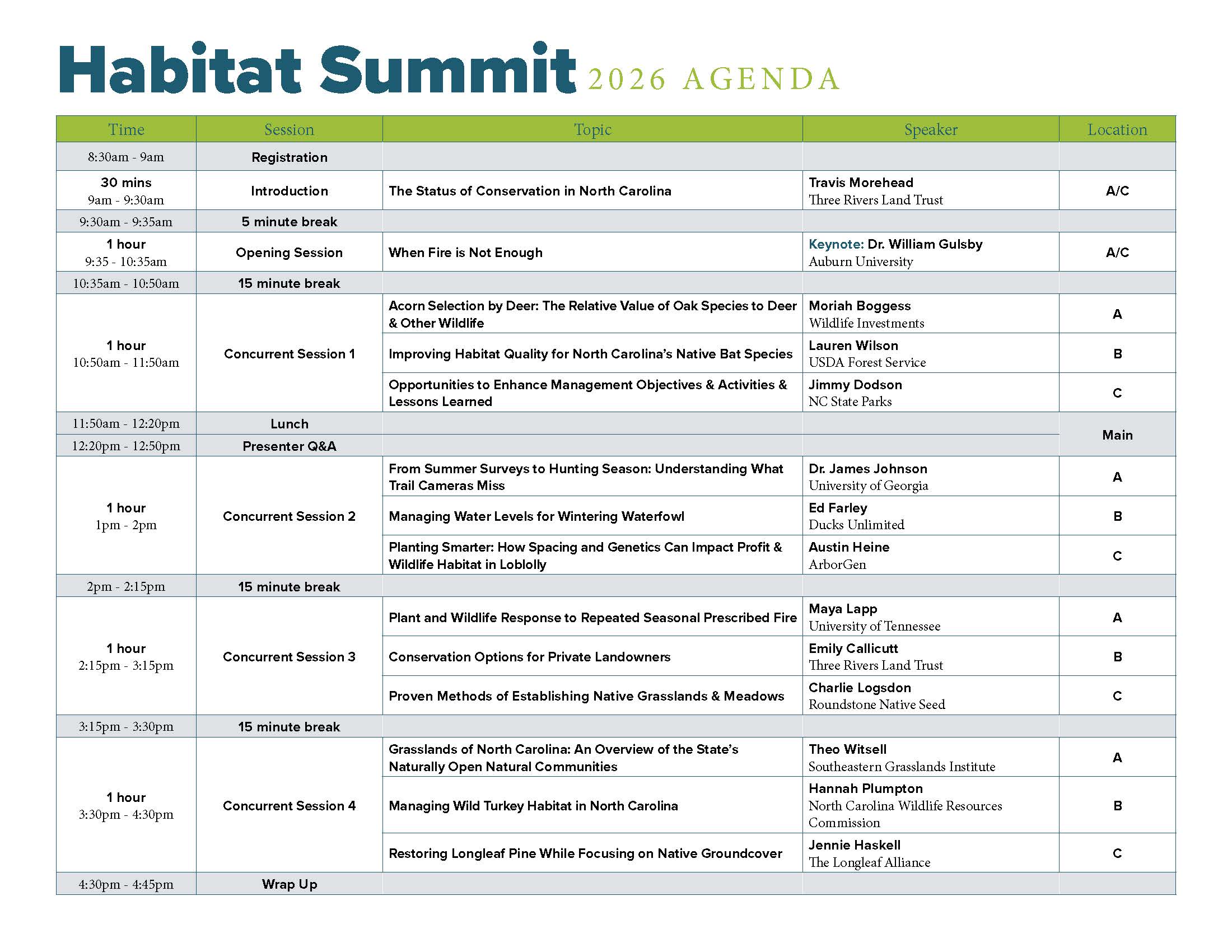
When Fire is Not Enough

Abstract: Prescribed fire remains one of the most cost-effective and ecologically important tools for wildlife habitat management. However, the modern Southeastern landscape’s plant species composition and structure often limits the ability of fire alone to restore or maintain desired plant communities for both game and non-game species. In this presentation, I highlight common scenarios where fire is insufficient to accomplish vegetation management objectives and discuss how these limitations can be addressed through the strategic integration of prescribed fire with herbicide or other targeted treatments, with emphasis on expected vegetation responses, tradeoffs, and practical guidance for implementation at operational scales.

Bio: Dr. Will Gulsby is an Associate Professor of Wildlife Ecology and Management at Auburn University and earned his M.S. and Ph.D. degrees in Forest Resources from the University of Georgia’s Warnell School of Forestry and Natural Resources. His teaching and research focus on applied habitat management for wildlife, which are informed by his frequent work with both public and private landowners and managers. He also co-hosts the Wild Turkey Science Podcast with Dr. Marcus Lashley.

Moriah Boggess

Wildlife Investments

Acorn Selection by Deer: The Relative Value of Oak Species to Deer and Other Wildlife.

Abstract: What drives acorn selection by deer: species, timing, tannins, or other factors? Traditional hunting lore emphasizes “sweetness” as the primary driver of selection, suggesting white oaks are preferred while red oaks are ignored until deer run out of other foods. However, this explanation overlooks critical variables such as landscape context, availability of other foods, and how these factors may change diet selection. A comprehensive understanding of oaks is vital, because effective habitat management must be informed by landscape context and a thorough evaluation of all cover types and plant species within it. These topics will be explored in the context of habitat management, as well as a review of bottomland and upland oak species across North Carolina and their identification.

Bio: Moriah Boggess is a deer biologist and habitat management specialist with more than a decade of land management experience across the Southeast and Midwest. His background combines research in deer ecology and forest management with practical, on-the-ground experience improving wildlife habitat on private lands.

During his master’s research, Moriah studied deer herbivory in upland forests and the effects of prescribed fire on acorn consumption. He later served in statewide Deer Biologist roles for both North Carolina and Indiana, where he worked closely with landowners and agencies to better understand and manage deer populations and the habitats they depend on.

Austin Heine

ArborGen

Planting Smarter: How Spacing and Genetics Can Impact Profit and Wildlife Habitat in Loblolly Pine

Abstract: For landowners choosing to replant after a harvest, the decision of what spacing and what level of genetics to plant back will influence the timber production, financial returns, and wildlife habitat of that future forest.  Current planting densities and genetic levels will be discussed so that landowners have a better understanding of how these decisions can help them achieve their goals.

Bio: Austin Heine serves as the Reforestation Advisor for North Carolina and Virginia, working directly with landowners to help them successfully reforest their properties and achieve their long-term management goals. Prior to this role, he spent eight years with the NC State Tree Improvement Cooperative, where he gained extensive experience in tree genetics, forestry research, and seedling development.

Austin specializes in guiding landowners through every step of the reforestation process—from selecting the appropriate seedlings and genetics to determining the best site preparation methods based on soil type and site conditions. His expertise helps ensure landowners choose the most suitable stock and strategies for establishing productive, healthy forests.

Austin holds a B.S. in Forest Management and an M.S. in Forestry from North Carolina State University and is currently a Ph.D. candidate in Forestry at NC State, where his research focuses on improving seed yields for mass control pollinated loblolly pine. By combining his background in forestry, genetics, and tree improvement with hands-on field experience, Austin works closely with landowners to support successful reforestation efforts across the region.

Hannah Plumpton

Upland Game Bird Biologist | North Carolina Wildlife Resources Commission

Managing Wild Turkey Habitat in North Carolina

Abstract: This presentation will focus on wild turkey habitat requirements and the management prescriptions to obtain and maintain them. It will cover habitat management in forested areas and open areas, with a particular focus on nesting and brooding habitat which are limited across North Carolina.

Bio: Hannah Plumpton is the Upland Game Bird Biologist for the North Carolina Wildlife Resources Commission. An expert in wild turkey biology and management, Hannah oversees statewide surveys and research projects aimed at sustaining North Carolina’s upland game populations.

Maya Lapp

Graduate Research Assistant (M.S. Candidate) | University of Tennessee

Plant and wildlife response to repeated seasonal prescribed fire 

Abstract: Prescribed fire is an important management tool for many ecosystems in the eastern US, including pine/oak savannas and woodlands. Fire intensity, frequency, and timing influence plant community composition and structure, as well as wildlife use. Historically, managers have applied prescribed fire primarily during the dormant season, but burning through the year is becoming more common. We discuss three relatively long-term fire seasonality studies spanning 6–15 years, investigating the effects of repeated prescribed fire in the dormant (January–March), early (April/May), mid- (June/July), and late (September/October) growing season on a 1-, 2-, and 3-year fire-return interval. Fire timing influences understory plant composition and midstory stem density, as well as use by deer, turkey, and predators.

Bio: Maya Lapp is a Master’s student working under the direction of Dr. Craig Harper at the University of Tennessee. She is investigating the effects of fire timing on plant communities in woodlands and savannas across the southeastern US. Her research results have direct implications to applying prescribed fire more precisely to reach management objectives. Maya is working to help landowners gain a better understanding and confidence in their use of prescribed fire to restore plant communities and improve their land for wildlife use.  

Emily Callicutt

Three Rivers Land Trust

Conservation Options for Private Landowners

Abstract: Emily’s presentation will discuss the conservation options available to private landowners. Topics include donated conservation easements, purchased conservation easements, property acquisition, and conservation land donations. Conservation options for farm and forest land will be discussed in detail. 

Bio: Emily began working for Three Rivers Land Trust in February 2021. She attended North Carolina State University where she graduated with a Bachelor of Science in Fisheries, Wildlife, and Conservation Biology in the spring of 2020. Emily graduated from Clemson University with a Masters degree in Wildlife and Fisheries Resource Management in December of 2023. She is also a Certified Associate Wildlife Biologist. Before coming to the Land Trust, she worked on wildlife management projects for private companies and managed the hunting program on a wildlife refuge. As a Montgomery County native, Emily is passionate about conserving the natural lands she has been able to enjoy in the region. In her spare time, Emily is an avid birder and also enjoys hiking, paddling, and baking.

Dr. James Johnson

Warnell School of Forestry and Natural Resources

From Summer Surveys to Hunting Season: Understanding What Trail Cameras Miss

Abstract: Late-summer camera surveys can be a valuable tool for estimating deer population parameters prior to the hunting season, but they only capture a snapshot in time of the herd structure when the surveys are conducted. Using baited cameras and unbaited (passive) cameras shows that seasonal changes in deer movement and behavior can result in significant redistributions of deer herds on a property during the hunting season, increasing observed buck numbers by as much as 60% following summer surveys.  This presentation will cover how to conduct an effective baited camera survey, how to estimate density and sex ratios, and how to interpret results in light of seasonal bias and deer movement. Emphasis will be placed on practical applications for landowners and how to use camera data to make better management decisions.


Bio:  Dr. James Johnson is a Certified Wildlife Biologist, a faculty member with the UGA Deer Lab, and is currently the Director of Continuing Education at the Warnell School of Forestry and Natural Resources.  His PhD and post-doctoral research focused on developing trail camera surveys for monitoring populations of white-tailed deer in Georgia through projects funded by the GA DNR Wildlife Resources Division.  He was born on one of Georgia’s oldest angus farms and has been involved in active land and wildlife management for over 20 years in the Southeast.  

Ed Farley

Manager of Conservation Programs, VA, NC, SC, and GA, Ducks Unlimited

Managing Water Levels for Wintering Waterfowl

Abstract: This presentation will provide a high-level overview of why managing water levels is one of the most effective tools to increase food for wintering waterfowl in NC. I’ll include information on water control structures, impoundment creation, and plant communities.

Bio: I am Ed Farley, and I was born and raised in eastern NC. I’ve been waterfowl hunting here for over 25 years. I have worked for DU for over 10 years up and down the Atlantic Flyway. Since 2024, I have been DU’s Manager of Conservation Programs in VA, NC, SC, and GA. I help deliver wetland conservation projects across those states. These projects include wetland restorations, conservation easements, and fee title acquisitions.

Jimmy Dodson

Biologist Program Manager | North Carolina State Parks

Opportunities to Enhance Management Objectives and Activities and Lessons Learned

Abstract: Forest managers are increasingly expected to balance multiple objectives across working lands, including timber production, wildlife habitat improvement, forest health, recreation, water quality protection, and long-term resiliency. This presentation will explore practical opportunities to enhance management objectives and on-the-ground activities through strategic planning, cross-disciplinary collaboration, and adaptive implementation. Drawing from field experience and real-world project examples, the discussion will highlight approaches that improved operational efficiency, 

Bio: Jimmy has been with NC State Parks since 2013 where he has served as a Regional Biologist, the statewide Restoration Specialist, Head of Natural Resources, and currently as the Biologist Program manager within the section.  He and the staff focus on:  fire ecology & implementation, the management & ecology of significant species and natural communities, invasive species, hydrology, and consultation for public use on more than 265,000 acres within the North Carolina State Park system. He is an AFE Certified Fire Ecologist, a TWS Certified Wildlife Biologist, and a NC Registered Forester.

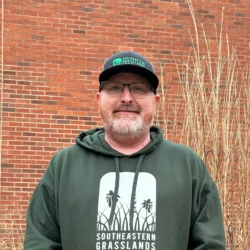
Theo Witsell

Co-Founder and Chief Conservation Officer | Southeastern Grasslands Institute

Woodlands and Grasslands of North Carolina: An Overview of the State’s Naturally Open Natural Communities

Abstract: While North Carolina is often thought of as a naturally forested landscape, several lines of evidence indicate that millions of acres of grasslands (including savannas) were present at the time of Euro-American settlement. These open ecosystems were scattered throughout the state and included prairies, barrens, balds, dunes, sandhills, flood-maintained riparian grasslands, marshes, open seeps and fens, savannas, open woodlands, and a variety of edaphic to semi-edaphic glade and rock outcrop communities. Many of these types contained significant variation along gradients of geology, slope, aspect, soil depth, soil chemistry, hydrology, and disturbance regime. These grasslands were disproportionally biologically diverse when compared to forested matrix communities and supported many endemic, disjunct, or otherwise rare species. They have also declined dramatically, with some types experiencing near total loss following Euro-American settlement. Protecting grassland remnants and restoring degraded or converted sites are among the highest conservation priorities in the region. The Southeastern Grasslands Institute is working on an updated inventory and classification of grassland and open woodland natural community types across the broader “Biogeographic Southeast”. This presentation will provide a brief overview of grassland types found in North Carolina, comment on their conservation status, and highlight some species of conservation concern that depend on them.

Bio: Theo Witsell is co-founder and Chief Conservation Officer for the Southeastern Grasslands Institute (SGI), where he oversees science and conservation programs. Prior to his current role at SGI, he worked for more than 25 years for the Arkansas Natural Heritage Commission (ANHC), the agency that houses that state’s Natural Heritage Program and System of Natural Areas. He had several roles in his time there, serving as a land manager before becoming the agency’s botanist, ecologist, and Chief of Research before leaving to work full time for SGI in early 2024. He has also worked as a consultant for a wide variety of federal and state conservation agencies and NGOs across eastern North America. A botanist at heart, Theo was co-editor of the Atlas of the Vascular Plants of Arkansas (2013), co-author of Trees, Shrubs, and Woody Vines of Arkansas (2021), and recently completed a book about his field work following the route of naturalist Thomas Nuttall’s 1819-1820 trip through what is now Arkansas and Oklahoma. He has authored or co-authored more than 45 scientific papers and book chapters and is a regional reviewer for the Flora of North America Project.  

Jennie Haskell

Coastal Partnerships Coordinator | The Longleaf Alliance

Restoring Longleaf Pine While Focusing on Native Groundcover

Abstract:

A fully functioning longleaf ecosystem supports wildlife, creates a forest with economic benefits, and maintains an aesthetically pleasing habitat for the landowner. The underlying force that drives these functions is the presence of healthy groundcover. Diversity in the groundcover plant community leads to diversity in the wildlife community. Many wildlife species require early successional habitats that prosper with frequent fire. Herbaceous grasses and wildflowers dominate these habitats. This presentation will discuss the importance and methods of securing the diverse understory when restoring longleaf pine to a location.

Bio:

Jennie Haskell is the Coastal Partnerships Coordinator for The Longleaf Alliance. She works closely with two of the three Local Implementation Teams in SC, the SoLoACE Longleaf Partnership and the Sewee Longleaf Conservation Cooperative. These LITs focus on bringing organizations, agencies, and landowners together to collectively support the longleaf ecosystem, specifically through education, outreach, restoration, technical assistance, and financial assistance. Before joining TLA in 2021, Jennie worked as a forester with the US Forest Service for over twenty years.

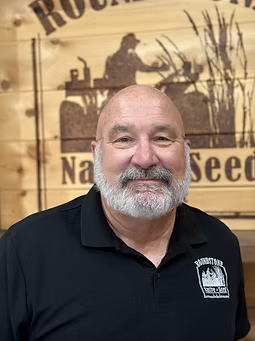
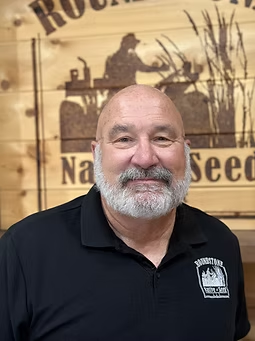
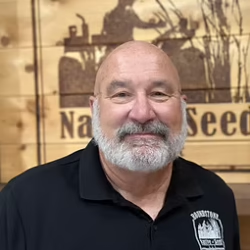
Charlie Logsden

Wildlife Biologist and Seed Specialist | Roundstone Native Seed

Proven Methods of Establishing Native Grasslands and Meadow

Abstract: Forested landscapes can be enhanced by strategically incorporating native forb and grass communities into broader management objectives, particularly on disturbed or degraded areas such as logging decks, temporary roads, utility corridors, wildlife openings, and retired agricultural fields. This presentation will explore proven methods for establishing native grasses and forbs within and adjacent to managed forests to improve biodiversity, support pollinators and wildlife, reduce invasive species pressure, and increase overall landscape resiliency. Emphasis will be placed on practical considerations including site preparation, seed mix development, planting methods, and long-term maintenance, along with lessons learned from restoring degraded sites into productive native plant communities that complement surrounding forest systems and strengthen long-term stewardship outcomes.

Bio:Charlie received his B.S. and M.S. in biology (emphasis on Wildlife) from Murray State University. Following graduation, he worked for 31.5 years for the Kentucky Department of Fish & Wildlife Resources as a wildlife biologist. During his career, he oversaw operations on several waterfowl areas, a prairie/field trial area, and the state’s first outdoor recreation area. Also, he was the state’s first elk restoration biologist involved in the re-establishment of a free-roaming elk herd in eastern Kentucky. In 1996 he received the Governor’s Land Heritage Excellence Award for prairie restoration on the West Kentucky Wildlife Management area using prescribed fire to stimulate native vegetation. He has worked a seasonal biologist for Roundstone since April 2018.

Connect to Conservation.

Sign up for our newsletter and enjoy the latest local conservation news. Topics include: